Call us today at +321 123 456 7
or email us at info@example.com
If you seek truth you will not seek victory by dishonorable means,
and if you find truth you will become invincible.
The people who have trusted us so far
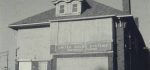
No doubt, the future of the legendary United Sound Systems recording studio on 2nd Avenue in Detroit is in question. Click here for the building’s history. The Michigan Department of Transportation, or MDOT, is moving forward with plans to upgrade the Interstate 94 expressway, and the United Sound Systems building appears to be in the way of the expansion.
A few weeks ago, I attended a meeting of the Detroit Sound Conservancy and the current owners of the United Sound Systems building showed up. Members of the Detroit Sound Conservancy are working with MDOT and the owners of United Sound Systems to save one of the oldest recording studios in the country.
A conundrum
People who knew Jimmy Siracuse, the founder of United Sound Systems, have said Siracuse opened a studio during the 1930s (1933 is often cited as the year). My conundrum: While spending two decades researching the early history of Detroit country music, I was hard pressed to find evidence of records made by United Sound Systems during the 1930s.
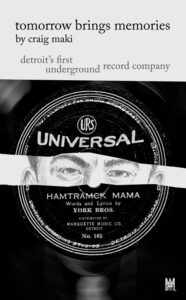
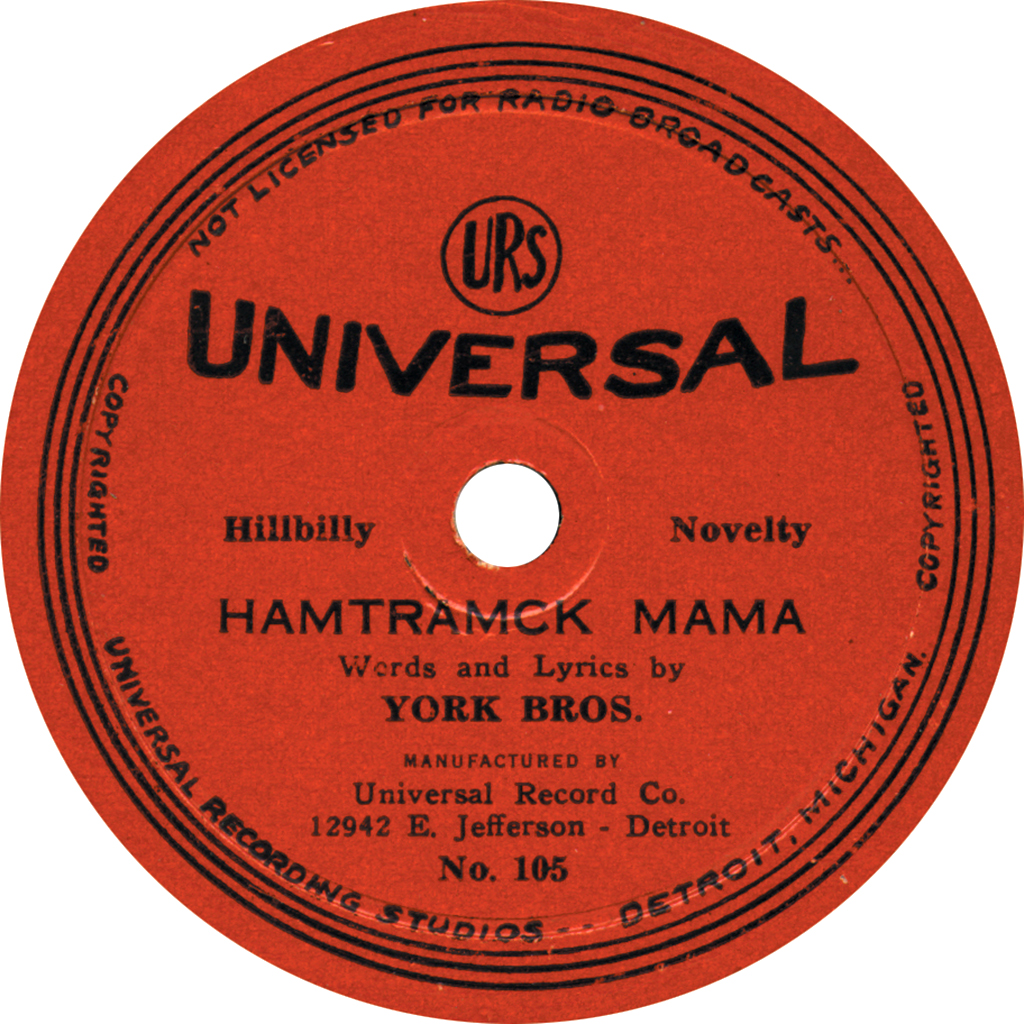 The Great Depression killed off most independent record companies, and it wasn’t until the York Brothers’ “Hamtramck Mama” of 1939 that country records began appearing on Detroit-based labels. From what I could tell, these were made for the jukebox business. “Hamtramck Mama” first appeared on the Universal label, cut at Universal Recording Studios on the east side (miles away from the Second Avenue building of United Sound Systems). The Universal record label issued records for only a few years, during the late 1930s and early 1940s.
Exhibit A
While digging around the Internet, I found a forum where former Detroit audio engineer Bob Olhsson stated Jimmy Siracuse and his family “operated a music store and recording studio during the 1930s.” Olhsson told of Siracuse’s army service at the Paramount studios in Queens, New York, during World War II. When he returned to Detroit, Siracuse set up United Sound Systems on 2nd Avenue, in a district of advertising agencies near the General Motors building on Grand Boulevard.
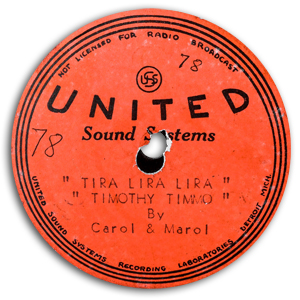
Exhibit B
I recently found two 78rpm records with United Sound Systems labels that I had never examined before. They represent the oldest labels I’ve seen, and appear to date from the 1940s. One is a custom-recorded disk of two children singing songs for their daddy. The other is music performed by an organist who worked at Detroit’s famous Arena Gardens roller skating rink.
Note the striking similarities of the early United Sound Systems record labels to the Universal Recording Studios above. From the label border to the lettering across top and bottom, to the hand-drawn label names and the small circles above them that sport initials of the studios, they appear to be the work of the same designer.
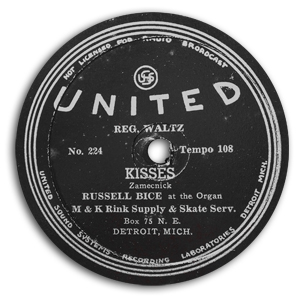 Was Jimmy Siracuse involved in Universal Recording Studios, whose activities began during the late 1930s? Universal updated its label design around 1941 (by the same designer, it appeared). Also in 1941, the Detroit Free Press published “Award made by F.P. poet,” (Dec. 30, p. 3) which mentioned a recording studio at the United Sound Systems address (5840 Second).
Verdict: Confused
I have often heard people mix up the names of the two studios. Perhaps I’m the one who’s confused, after all. I suspect that if Siracuse had anything to do with Universal, it was during that studio’s earliest days, before Siracuse established his own enterprise. On the other hand, with no documentation to be found, one could easily assume that Siracuse had nothing to do with Detroit’s Universal studio, and the record label designs were the only things they had “in common.” Perhaps a Detroit-based printer with an in-house artist had a monopoly on record label work; or the company that pressed the records themselves provided custom-designed labels to anyone who wished to manufacture records.
 We’ve heard it over and over: During the 20th century, poor Appalachians hit the hillbilly highway north to Detroit, where they found work in factories and warehouses. … There’s truth in that, but it’s an oversimplification. Although Appalachians arrived in great numbers, people from all over the South landed in Detroit, working in a variety of industries. Many people started and operated their own businesses.
One of my favorite resources for this project is James N. Gregory’s “The Southern Diaspora,” published by University of North Carolina Press (2005). Gregory is professor of history at the University of Washington and director of the Seattle Civil Rights and Labor History Project. His book presents historical data on the movement of white and black southerners across the United States (during the decades covered by this project), as well as an eye-opening social and cultural analysis – including many references to Detroit. If you’d like to dig deep into some of the major changes that transformed American society in the last century, I recommend it.
Visit the author’s website here.

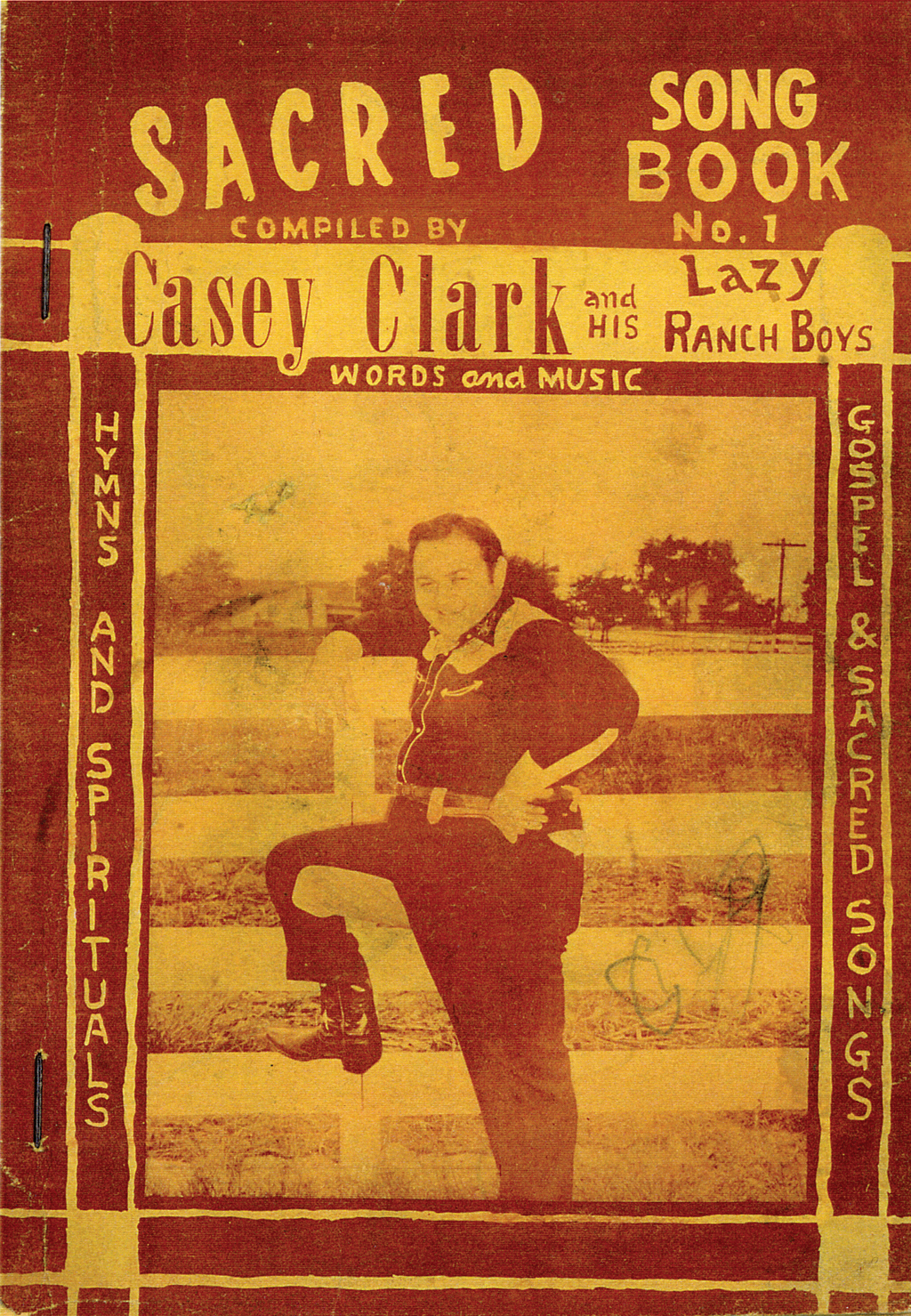
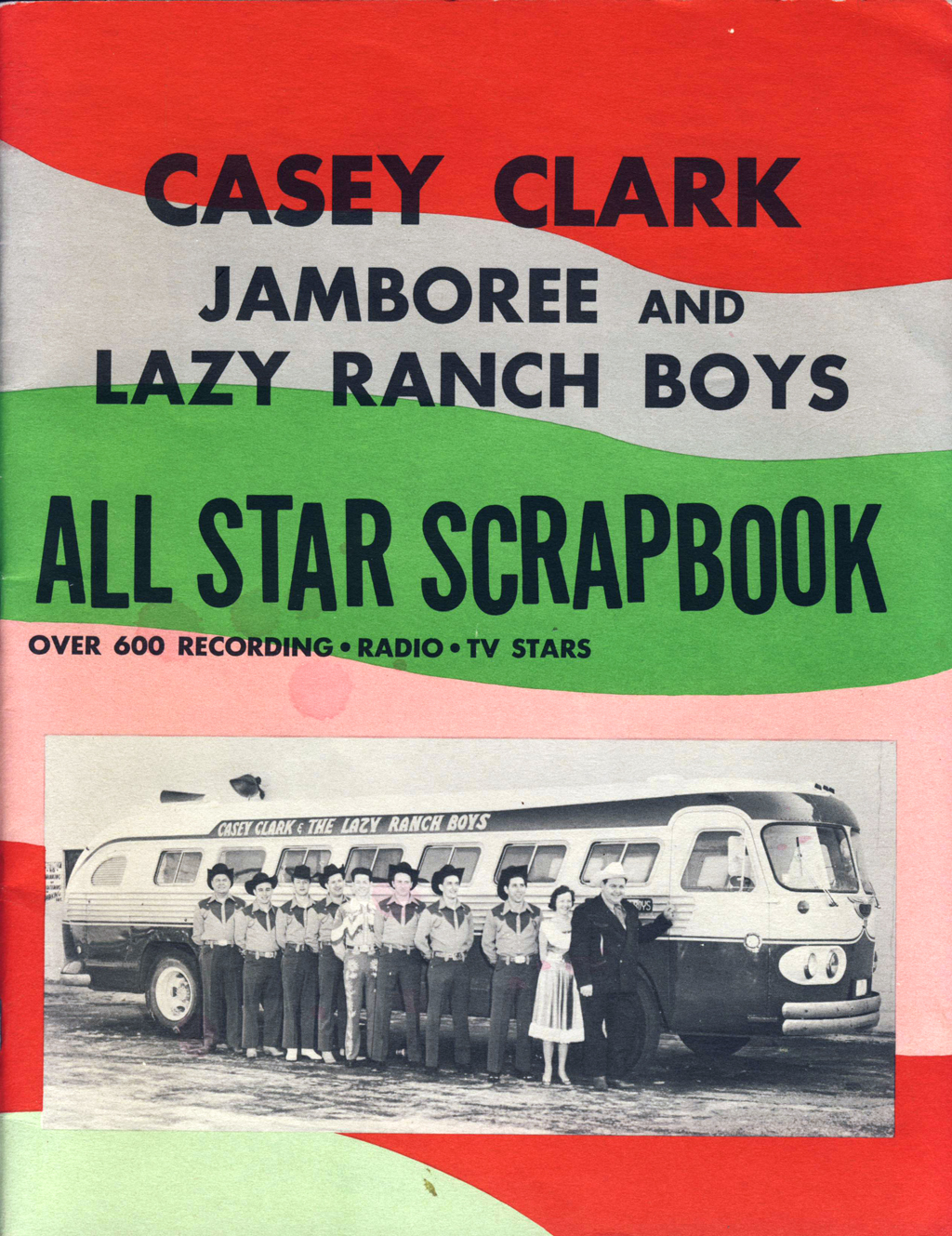
From decades ago to the present, country artists have created and sold promotional books. Most contain a combination of pictures, song lyrics and music. In Detroit, the Lazy Ranch Boys sold two “scrapbooks” of photos and descriptions from 1953 until they left town in 1958. Here are the covers of three known Casey Clark and the Lazy Ranch Boys books, along with a special bonus: Jimmy Martin’s Detroit scrapbook from ca. 1955.
Casey Clark’s story will be included in the book “Detroit Country Music: Mountaineers, Cowboys, and Rockabillies” by Craig Maki and Keith Cady, published by University of Michigan Press.


 As promised in my post about the recent Rockabilly Reunion at United Sound Systems in Detroit, I’m pleased to share a video of the “Uniquely Detroit” recap of the event, as well as the complete “Live In The D” segment that aired this week on Detroit Channel 4 TV, featuring yours truly with Johnny Powers.
Powers and I had a great time with Detroit TV legend Guy Gordon in WDIV’s shiny new studio. Click here to read their terrific article about the July 27 event, and view a photo slideshow! My thanks to Vic, Alex, Halsten, and Jay.
For more coverage of the Detroit Rockabilly Reunion at United Sound Systems Recording Studios, check out this post on the DETROITDVOTION blog.

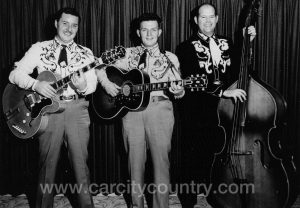
Perhaps the most popular country singers in Detroit during the 1940s and 1950s, the York Brothers, George and Les, made the most important country music records in Detroit during the early 1940s. By 1942, the Yorks created a rocking sound with two guitars and bass, about a dozen years before artists such as Elvis Presley and Johnny Cash recorded with the same instrumentation at Sun Records in Memphis, Tennessee. The York Brothers story appears in the book “Detroit Country Music – Mountaineers, Cowboys, and Rockabillies.”
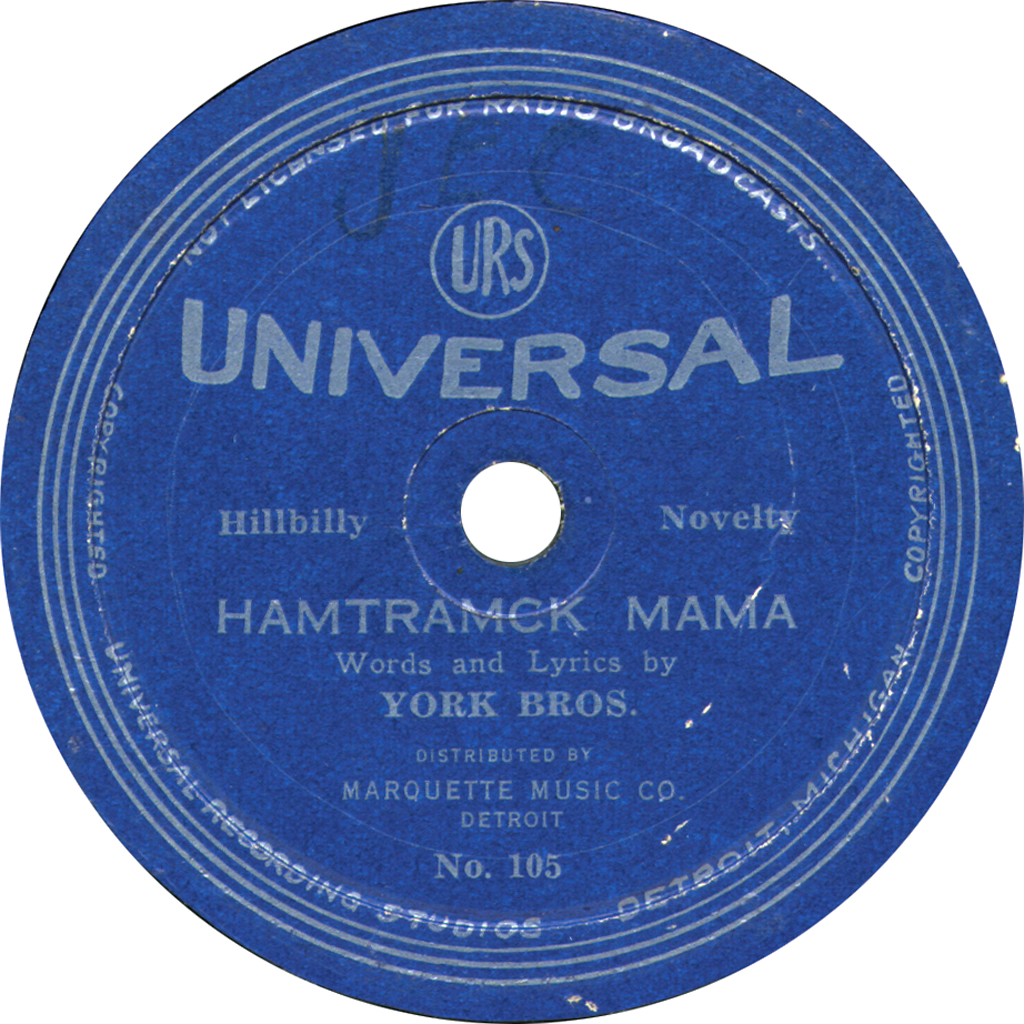
Here is a discography of the York Brothers’ recordings on Detroit labels. The amount of music they produced 1939 to 1944 is staggering, and gaps of information in the list below suggest this may not be all the Yorks recorded in Detroit. Thanks to Cappy Wortman, John Morris, Tony Russell, Bob Pinson, Dick Grant, Al Turner, Prague Frank, and Dave Sax for research that contributed to this list.
1939, Universal Recording Studios, 12942 E. Jefferson, Detroit, Michigan
George York: vocal, acoustic guitar; Leslie York: vocal, acoustic take off guitar
Universal 105 “Hamtramck Mama” (Leslie York)
Universal 106 “Going Home”
Note: Universal 105 and 106 issued on a single disk together.
Listen to: York Brothers – Hamtramck Mama
ca. 1940, Universal Recording Studios, 12942 E. Jefferson, Detroit, Michigan
George York: vocal, acoustic guitar; Leslie York: vocal, acoustic take off guitar; unknown (possibly Les York): Hawaiian steel guitar
Universal 107 “Highland Park Girl”
Universal 108 “Detroit Hulu Girl”
Note: Universal 107 and 108 issued on a single disk together.
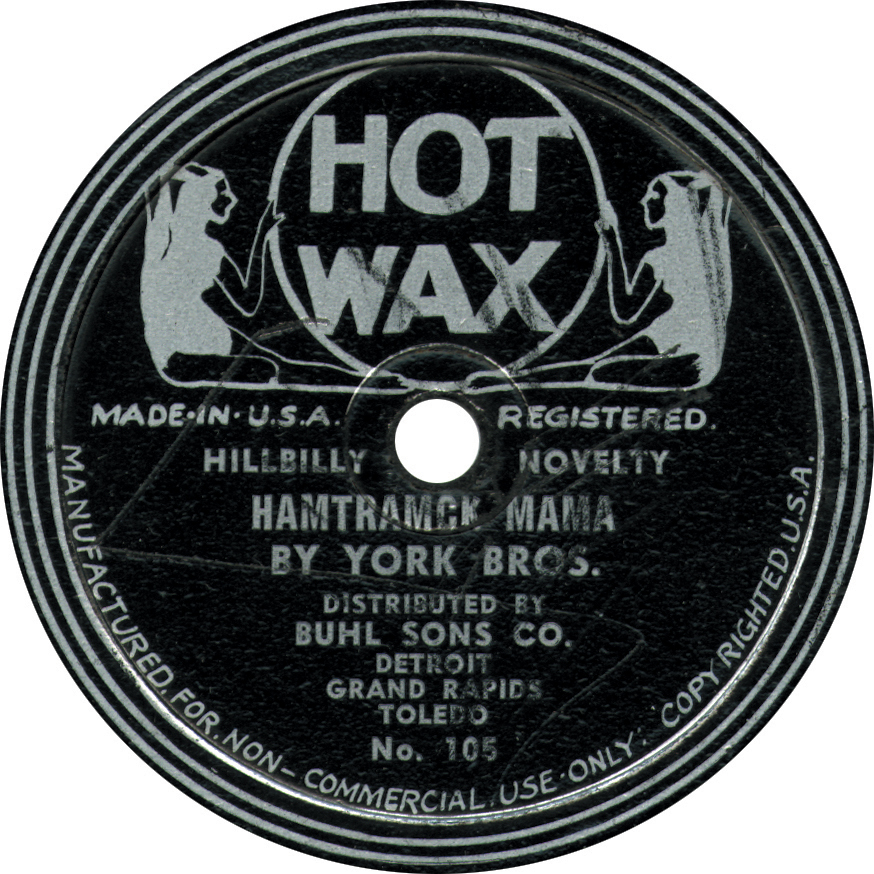
ca. 1940, Universal Recording Studios, 12942 E. Jefferson, Detroit, Michigan
George York: vocal, acoustic guitar; Leslie York: vocal, acoustic take off guitar
Universal 126 “Conscription Blues” (York Bros.)
Hot Wax 127 “That Nagging Young Husey” (York Bros.) (backed with “Hamtramck Mama”)
Note: Universal 126 and 402 (below) issued on a single disk together.
ca. 1940, Universal Recording Studios, 12942 E. Jefferson, Detroit, Michigan
George York: vocal, acoustic guitar; Leslie York: vocal, acoustic take off guitar; unknown (possibly Les York): Hawaiian steel guitar
Universal 402 “Gamblers Blues” (York Bros.)
Universal 404 “Sweetheart Darling” (York Bros.)
Universal 405 “It Taint No Good” (York Bros.)
Note: Universal 405 appeared on Hot Wax and Mellow labels backed with Universal master 105, as well as Mellow backed with Mellow master 1105 (see below).

1942, Universal Recording Studios, 12942 E. Jefferson, Detroit, Michigan
George York: vocal, acoustic guitar; Leslie York: vocal, electrically amplified take off guitar
Mellow 1619-A “Blue Skies Turned To Gray” (Leslie York)
Mellow 1619-B “I Don’t Want No Part Of You” (Leslie York)
Mellow 1620-A “I’ll Be Happy Again” (Leslie York)
Mellow 1620-B “Goodbye And Luck To You” (Leslie York)
Mellow 1621-A “Long Gone” (Leslie York)
Mellow 1621-B “Just Wanting You” (Leslie York)
Mellow 1622-A “Hail, Hail Ol’ Glory” (Leslie York)
Mellow 1622-B “Riding And Singing My Song” (Leslie York)
Mellow 1623-A “Hillbilly Rose” (Leslie York)
Mellow 1623-B “If I Would Never Lose You” (Leslie York)
Mellow 1624-A “Going Back To The Sunny South” (Leslie York)
Mellow 1624-B “Life Can Never Be The Same” (Leslie York)
Mellow 1625-A “We’re Gonna Catch That Train” (Leslie York)
Mellow 1625-B “It Makes Me Jealous Hearted” (George York)

1942, Universal Recording Studios, 12942 E. Jefferson, Detroit, Michigan
George York: vocal, acoustic guitar; Leslie York: vocal, electrically amplified take off guitar, *acoustic guitar; unknown (poss. Johnnie Lavender), bass
Mellow 1105 “Hamtramck Mama” (version 2)
Mellow 1629 “In Old Tennessee” (Leslie York)* [one-sided disk?]
Mellow 1633-A “Memories Of You” (Leslie York)
Mellow 1633-B “New Trail To Mexico” (Leslie York)
Mellow 1634-A “Rose Of The Rio Grande” (Leslie York)
Mellow 1634-B “York Brothers Blues” (Leslie York)
Mellow 1635-A “Kentucky’s Calling Me”* (Leslie York)
Mellow 1635-B “Got To Get Rid Of My Worried Mind” (Leslie York)
Mellow 1636 “I Told The Moon About You” (Leslie York) [one-sided disk?]
Mellow 1637 (-A?) “Maybe Then You’ll Care” (Leslie York)
Mellow 1637 (-B?) “You Stayed Away Too Long” (Leslie York)
Listen to: York Brothers – A Merry Christmas To The Boys Over There
1942, Universal Recording Studios, 12942 E. Jefferson, Detroit, Michigan
George York: vocal, acoustic guitar; Leslie York: vocal, electrically amplified take off guitar; Johnnie Lavender, bass
Mellow 1638-A “Going To The Shindig” (York Bros.)
Mellow 1638-B “Mother’s Sunny Smile” (York Bros.)
Mellow 1640-A “A Merry Christmas To The Boys Over There” (Leslie York)
Mellow 1641-B “Not Over Thirty-Five” (Leslie York)
Mellow 1642-A “I’ve Got My Eyes On You” (George York)
Mellow 1642-B “You’ll Pay For It All” (Leslie York)
Note: Mellow 1640-A and 1641-B issued together on one disk.

ca. 1942, Universal Recording Studios, 12942 E. Jefferson, Detroit, Michigan
George York: vocal, acoustic guitar; Leslie York: vocal, electrically amplified take off guitar; * unknown (possibly Les York): Hawaiian steel guitar; Johnnie Lavender, bass
Mellow 1662-A “The Stars In Heaven”
Mellow 1662-B “The Execution”
Mellow 1664-A “There’s No Stars In Heaven”
Mellow 1665-B “Hula Girl Wobble” (instrumental)*
Mellow 1666-A “You Lied To Me”
Note: These sides turned up as one-sided 78rpm disks with white paper labels and hand-written information (the matrix numbers were also etched into the deadwax of the records). It isn’t known if they were issued on Mellow as commercial records.
Listen to: York Brothers – I’ve Got My Eyes On You
1949, using “Rialto” as its label, Fortune Records reissued Universal master 402 “Conscription Blues” as “Calling Me,” with another act on the flip side.
Rialto R-118 B “Calling Me” York Brothers [Note: Same as “Conscription Blues” Universal/Hot Wax 402]
Rialto R-118 A “You Are My Sunshine” Cliff and his Cowboys [No evidence of the York Brothers playing on this track.]
1949, Fortune Records reissued Universal masters 105 and 107 together, apparently using the same metal stamper originally used for 105 on Universal and Hot Wax releases.
Fortune 120 “Hamtramck Mama”
Fortune 120 “Highland Park Girl”
1953, Fortune Records reissued Universal masters 106 and 108 together, apparently using the same metal stamper originally used for 106 on Universal release.
Fortune 180 “Detroit Hula Girl”
Fortune 180 “Going Home”

One of Southeast Michigan’s best-known country artists of the 20th century, Jimmy Williams promoted stars of Nashville on radio and in person during the 1960s. Click here to view Part 1. Click here to view Part 2.
****************************************************
In 1964, local producer Kit Wright hired Williams to make a record for the Glenn label based in Hammond, Indiana. With guitarist Tracey White, he cut “New Memories For Old” and “Jimmy’s Yodel” at Sound Inc. studios. “I’d go around to some of these bars where people I knew would play, like Frankie Meadows, who used to play down in Hazel Park [at the Wayside Bowling Lounge],” said Williams. “I’d go down there and they’d get me up to sing, and I’d always have to do the yodel. So one night I was at one of these bars when Kit Wright said, ‘I’d like to record you’.”
Williams started the “JW” label around 1965, on which he issued more sides by himself, including two songs written by local singer Hank Martin: “Two’s A-Plenty – Three’s A-Crowd” and “Revenge,” two classic honky tonk anthems about drinking and broken-hearted love that appeared on Williams’ first JW single.[1]
In January 1966, the newly formed Michigan Country Music Association, led by Jack Wilkerson, Jim Mitchell, and Frankie Meadows, among others, honored Williams as “Country Music DJ of the Year.” Williams was working at WDOG Marine City when he accepted the award at an event in Burton High School, east of Flint. The Rhythm Rustlers also received an award for “outstanding showmanship and devotion to charitable assistance when called on for benefit shows.” [2]
High on the hog
One of Jimmy Williams’ best performances appeared on Howard Walker’s “Walker” label in 1966. With his brother Russ Jr. singing harmony and slapping a doghouse bass, Williams sang “High On The Hog.” His most rocking recording, the tune was cut without drums, with tambourine and a swinging guitar filling out the rhythm. Walker’s colorful lyrics celebrated a workingman’s life:
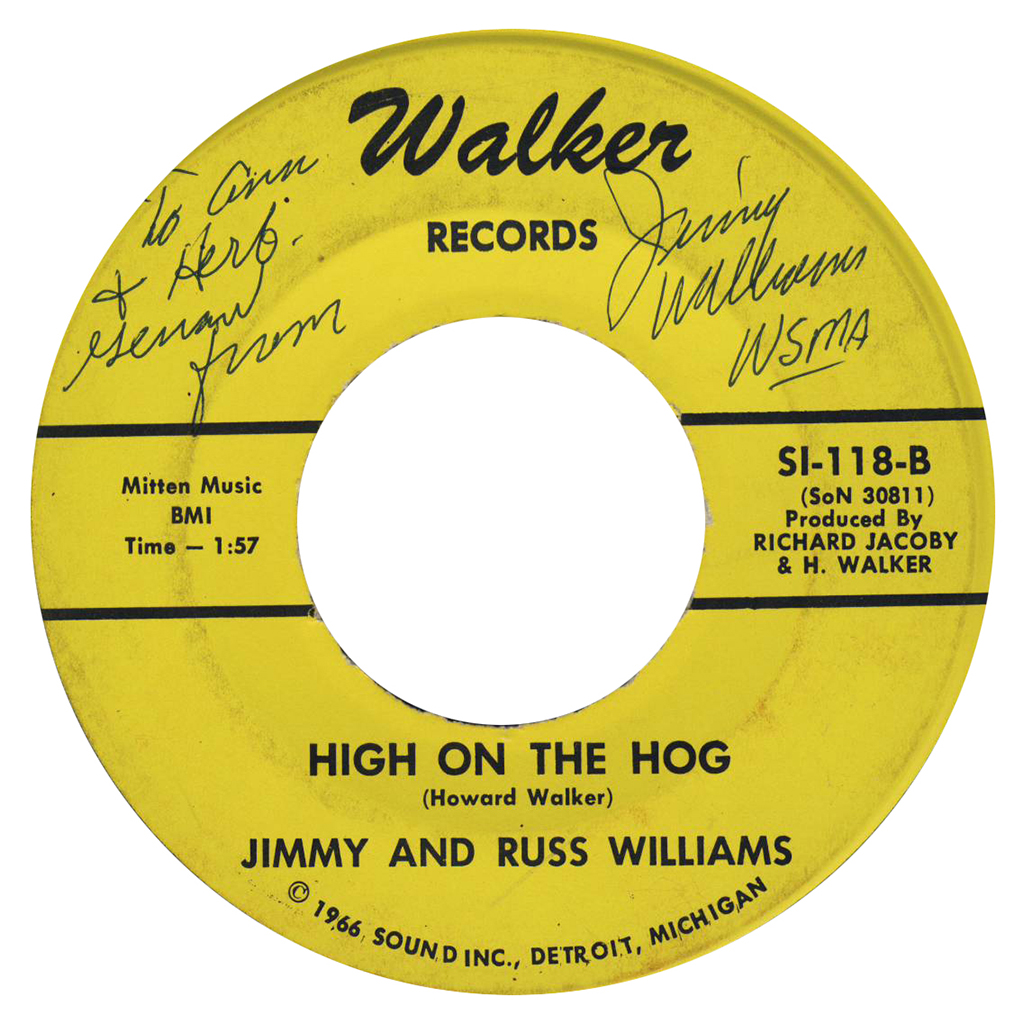
I give the man a dollar on my ’55 Ford
Then I’ll be on my way
I pick up my little Susie and head for town
We live high on the hog paydayHigh on the hog payday
High on the hog payday
I gotta eat beans all through the week
But live high on the hog payday
The record’s A-side, “Looking Through The Tears,” a song about lost love, presented a shuffle similar to Ray Price’s late 1950s hits. The single was attributed to Jimmy and Russ Williams, as if they were a single act. However, Russ Jr. was working at the Starlite Inn, in Utica, with his band fronted by singer Steve Glenn from Sarnia, Ontario, while Jimmy continued working with the Rhythm Rustlers at Dutch’s Outpost in Port Huron.
Listen to: Jimmy and Russ Williams – High On The Hog
On August 14, 1966, Russ Williams Jr. and his wife Gloria died while returning home from a vacation in Nashville. A car struck their pickup truck head-on at the Fort Street exit ramp from Interstate 75 in Detroit.
Two weeks later, the owners of the Starlite Inn held a jamboree in honor of Russ and Gloria Williams. Top C&W entertainers of Southeast Michigan shared the stage in support of the Williams family. Eddie Jackson, Swanee Caldwell, Patti Lynn, Frankie Meadows, and Jess Childers, to name a few, performed from noon into the evening. The club owners estimated one thousand people visited throughout the day. Jimmy Williams kicked off the proceedings with his band.[3]
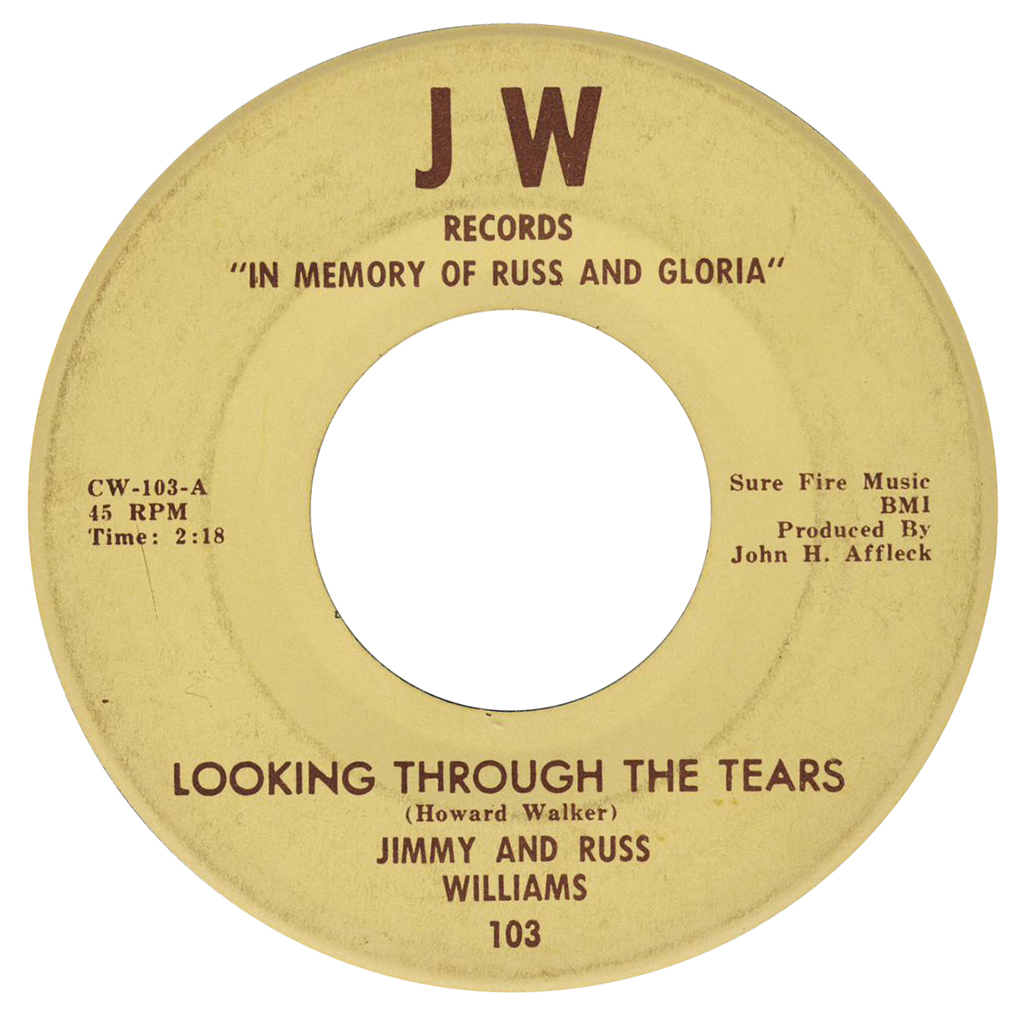
One of Williams’ last singles on “JW” served as a memorial to Russ and Gloria Williams. He reissued “Jimmy’s Yodel,” one of his most requested songs, backed with “Looking Through The Tears.”
WSMA = WSM Action
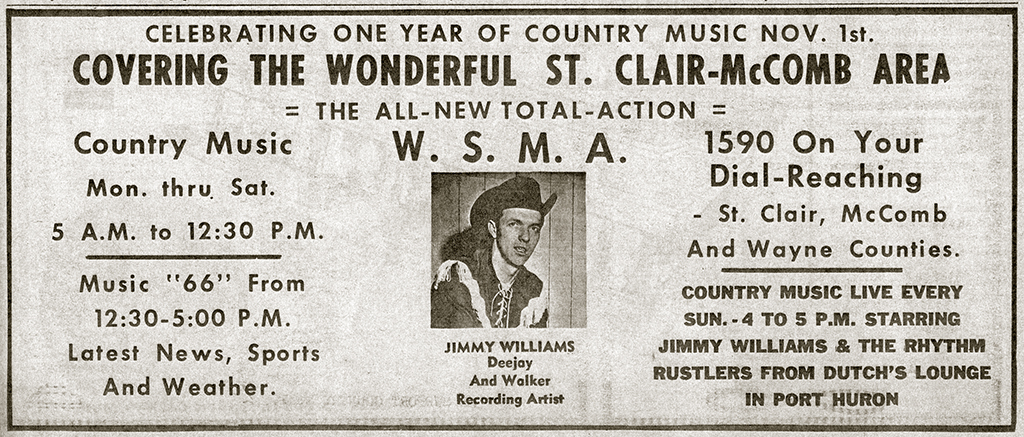
Williams’ influence on country music in the Blue Water region manifested itself in WDOG radio’s next set of call letters, WSMA, adopted by a new owner in 1967. “Dick Sommerville of Port Huron bought WDOG and changed its call letters to WSMA,” he said. “I suggested … that he change the call letters to WSMA, to kind of [mimic] WSM in Nashville. … They were playing big band music up ’til twelve o’clock in the day, and they’d switch over to country music at twelve until sign-off. At that time, they had sign-off at sunset. They’re a thousand-watt station.” Sommerville decided to broadcast country music at sign-on until 12:30 p.m., filling out the rest of the schedule with pop music delivered with “all new total action,” as station advertisements read.
Williams mixed blues, country, square dance calling, and comedy in his shows. Besides playing music every night at Dutch’s Outpost in Port Huron, Williams and his band broadcast their Sunday matinee performances live on WSMA, until about 1972 when Mathieson turned over management of the nightclub to her son. “We had no problem,” said Williams. His new band, the Country Dukes, found a new booking right away at Brody’s Bar in Port Huron.
He cut a 45 rpm single “Loose Talk” b/w “Stompin Steel” (featuring Whitey Cutcher) on Sound Inc.’s label (Sound 283) and followed it with an album of old favorites, including Eddy Arnold’s “I Walk Alone,” which he used as the title of the record. Around 1975 he pressed an album collection of old recordings.
Although Williams’ vocal style remained heavily influenced by the music of his youth – country singers who projected their voices for dancers in halls and crowded bar rooms – when called upon by his audiences he could croon in the style of Dean Martin, and rock’n’roll like Carl Perkins. During the 1970s, Williams kept up with the times, as songs such as “Proud Mary” (learned from Creedence Clearwater Revival’s hit version) came into his repertoire.
As late as the mid-1980s, WSMA aired performances of Williams in local nightclubs such as the Ebb-Tide Lounge in New Baltimore. In 1987, Sommerville sold WSMA. “I left the radio station in 1988,” he said, adding he had no regrets. “I’ve enjoyed it.”
WSMA radio’s geographic position was such that its signal barely reached Detroit and Flint, major hubs of country music activity. Although Williams tied his career to this conundrum, he made a comfortable living in the Blue Water region.
After leaving radio, Williams worked in construction near his home north of Richmond, Michigan. “Every once in a while I get together with Ted Pavlik and the Polka Boosters down at the Belle River Lounge,” he said. “Once a month they have a meeting, and [they] bring their instruments and we get up. They get up and play, and I get up and sing.”
Author’s update: Jimmy Williams passed away Nov. 1, 2016.
****************************************************
Notes
- Williams also issued a single by Glenda Wolfe, “Early Bird” backed with “Oh Bright Moon.” “Early Bird” recently turned up on a European rockabilly compilation CD by Buffalo Bop titled “Restless Doll.”
- “Williams Award Winner” Billboard (January 22, 1966. Vol. 78, No. 4), 42.
- Norm Childs. “Memorial Tribute Paid To Detroit Area Artist Russ Williams” Music City News – Michigan Supplement (October 1966. Vol. 1, No. 1) 1B, 10B.

In 1993 Bear Family Records assembled all of Jimmy Work’s records in a double compact disc package, including his earliest efforts made in Detroit for the Trophy and Alben labels. Work also cut all of his Dot records (1954 to 1956) in Detroit. Liner notes author Rich Kienzle and Bear Family’s Richard Weize made some very good guesses at the personnel on these sessions.

From personal conversations with Jimmy Work, as well as a timeline of Casey Clark’s Lazy Ranch Boys assembled from interviews with various members of the band, I’ve pieced together some information that’s probably as close to the truth as a body can get without being there. This information concerns just Work’s activities in Detroit, as I don’t have anything to add to his better documented Decca, Bullet, London, and Capitol sessions. Work’s story appears in the book “Detroit Country Music – Mountaineers, Cowboys, and Rockabillies.”
1945, unknown studio, Detroit, Michigan
Trophy T14 “Those Kentucky Bluegrass Hills” backed with “You’re Gone, I Won’t Forget”
Trophy T15 “Rainy Rainy Blues” b/w “Heart That Steamboat Whistle Blow”
Jimmy Work: vocal/guitar; Dorris Woodruff: electric guitar
Autumn 1948, unknown studio, Detroit, Michigan
Alben 501 “Tennessee Border” b/w “Your Jealous Heart Is Broken Now”
Jimmy Work: vocal/guitar; Dorris Woodruff: electric guitar; unknown: rhythm guitar; unknown: bass
Listen to: Jimmy Work & his Border Boys – Tennessee Border
Circa August 1954, United Sound Systems, Detroit, Michigan
Dot 1221 “Making Believe” b/w “Just Like Downtown”
Dot 1245 “That’s What Makes The Jukebox Play” b/w “Don’t Give Me A Reason To Wonder Why”
Jimmy Work: vocal/guitar; Casey Clark: fiddle; Bronson Reynolds: bass; Buddy Emmons: steel guitar; Chuck Carroll: electric guitar
Ca. August 1955, United Sound Systems, Detroit, Michigan
Dot 1267 “Don’t Knock, Just Come On In” b/w “Let ‘Em Talk”
Dot 1277 “My Old Stomping Ground” (paired with “Hands Away From My Heart”)
Unissued “Blind Heart”
Jimmy Work: vocal/guitar; Casey Clark: fiddle; Bronson Reynolds: bass; Terry Bethel: steel guitar; Donnel Hemminger: electric guitar

Ca. September 1955, United Sound Systems, Detroit, Michigan
Dot 1272 “There’s Only One You” b/w “When She Said You All”
Dot 1277 “Hands Away From My Heart” (paired with “My Old Stomping Ground”)
Unissued “Puttin’ On The Dog (Tom Cattin’ Around)”
Jimmy Work: vocal/guitar; Casey Clark: fiddle; Bronson Reynolds: bass; Jimmy Murrah: steel guitar; Donnell Hemminger: electric guitar
Ca. February 1956, United Sound Systems, Detroit, Michigan
Dot 1279 “Rock Island Line” b/w “That’s The Way It’s Gonna Be”
Jimmy Work: vocal/guitar; Casey Clark: possibly bass; Dick McCobb: piano; Donnel Hemminger: electric guitar; Ted Bay: drums
Ca. April 1956, United Sound Systems, Detroit, Michigan
Dot 1284 “You’ve Got A Heart Like A Merry-Go-Round” b/w “Blind Heart”
Dot 1287 “That Cold, Cold Look In Your Eye” b/w “Digging My Own Grave”
Jimmy Work: vocal/guitar; Casey Clark: fiddle; Bronson Reynolds: bass; Billy Cooper: steel guitar; Donnel Hemminger: electric guitar

Last June marked the forty-first anniversary of a monster country music fair celebrating the fiftieth anniversary of WEXL radio, Royal Oak, held at Swiss Valley Park near Utica. The organizers (who included WEXL’s Joe Patrick, and musician Ford Nix) produced an eleven-hour event of continuous entertainment. Because the station was synonymous with country and folk music from its first old-time religious broadcasts during the 1920s, to its adoption of a twenty-four-hour country music format in 1962 (the first Detroit area station to do so), the 1973 “Country Music Fair” not only represented a celebration of fifty years, but recognized the long history of country music in Detroit.

According to Billboard magazine, the celebration began with “Sunday morning church services, and then a continuous show from 9 a.m. to 8 p.m. with six hours of live remote broadcasting.” The showcase featured Michigan-based talent, along with the Grand Ole Opry’s George Morgan, guest star of the day. [1]
In his 1948 self-published biography, WEXL founder Jacob B. Sparks wrote that the station was created by Robert Miller and his father A.G. Miller in 1924, with the original call letters WAGM. “The station was the third in Michigan and the 298th in the United States,” wrote Sparks. [2]
By 1929, the Millers decided they bit off more than they could chew, and Sparks created the Royal Oak Broadcasting Company to purchase the station. From then on, religious programming performed by local musicians dominated its schedule, although by the end of the following decade WEXL boasted several cowboy and Hawaiian music shows.
During the years after World War II and into the 1950s, Cousin George Cross and Jack Ihrie presided over the “Sagebrush Melodies” record party during the middle of the day. Ihrie in particular proved a popular emcee at major country music events in Detroit. In 1962, the station went all-country with guidelines requiring disk jockeys to air popular records compiled in WEXL listener surveys, at least one record by a local artist every hour, at least one religious song each shift, and listener requests. WEXL also broadcast live music from local nightclubs. By 1967, the WEXL Country Club boasted 50,000 fan members.
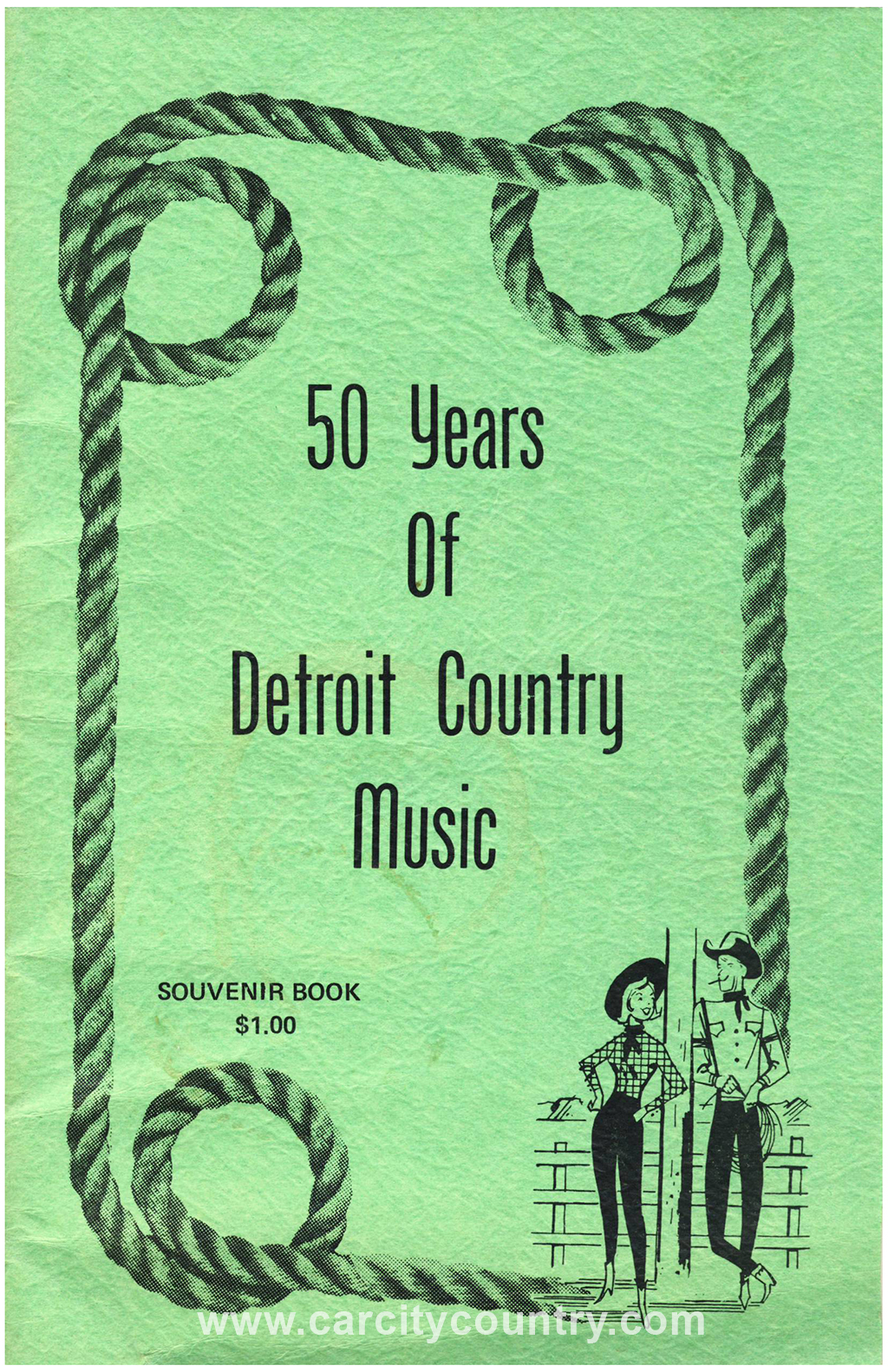
Musicians Loyd Howell and Don Rye, founders and operators of the Ry-Ho Records label in Romulus assembled a small book to commemorate WEXL’s anniversary. In the introduction of “50 Years of Detroit Country Music” Pam Howell declared, “Country music is as American as Plymouth Rock … and is fast becoming the world’s number one music.” [3] Inside its pages appeared “The WEXL Story” by Loyd Howell, historic photos of WEXL from Sparks’ book, as well as portraits in pictures and words of WEXL staff, and Detroit C&W entertainers such as Curly Dan, Joe Pain, Uncle Jack Hilsinger, and Joy Jean.
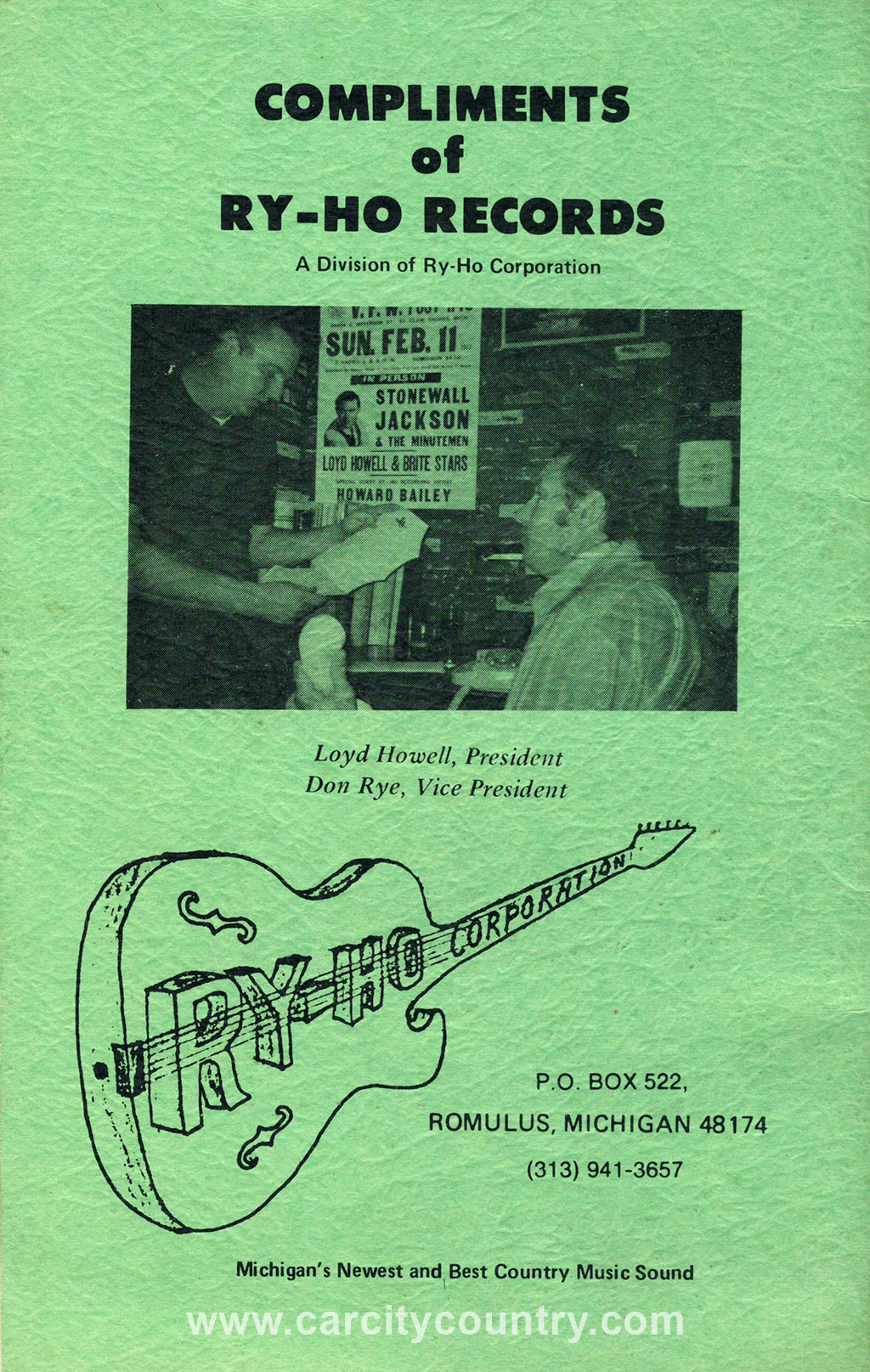
One year later, the Sparks family caved to industry pressures (brought in part by the 1970 introduction of the top-forty country radio format at WJBK radio) and returned its broadcasts to religious programs. Also in 1974, the Michigan Department of Natural Resources purchased the land Swiss Valley Park was built on.
Crawford Broadcasting now operates WEXL “Glory” 1340. And the hand-built structures that once adorned Swiss Valley Park have been removed, with the old park now a nature preserve.
Despite countless changes of venues, outlets, and artists, country and folk music in Detroit reaches back more than 90 years – a fact as solid as Plymouth Rock.
**********************
Notes
- “Station Sets Golden Anniv. With Fair,” Billboard (May 26, 1973. Vol. 85, No. 21), 46.
- Jacob B. Sparks, Jacob’s Well of Life: The Autobiography of Jacob B. Sparks (Detroit: Self-published, 1948) 125.
- Don Rye, Loyd and Pam Howell, 50 Years of Detroit Country Music (Romulus, Michigan: Self-published, 1973) 1.

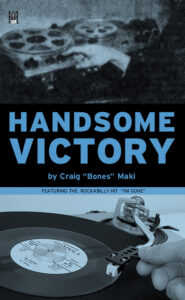
Ladies and gents, here ’tis, a blazing new read on Detroit music history: “Handsome Victory,” by Craig “Bones” Maki, featuring the rockabilly hit “I’m Gone.” Perfect for record hunting trips, or reading at the beach, this little pocketbook fits perfectly in the back pocket of your dungarees!
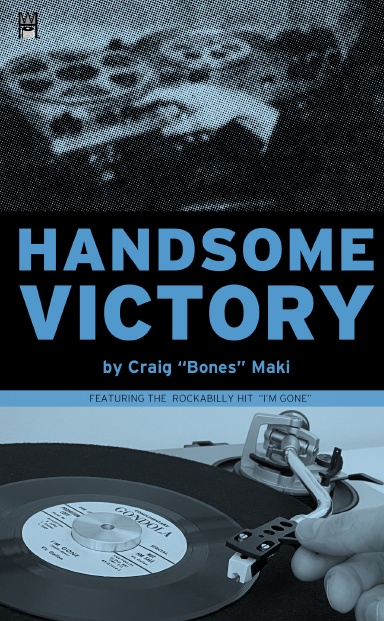
We begin with the story (a “remix,” and “extended take,” as some say in the music biz) of one of the least-known rockabilly 45s ever made in Detroit: Vic Gallon’s “I’m Gone.” Legendary guitarist Dennis Coffey — then known as “The Rock’n’Roll Kid,” who achieved his own No. 6 pop hit with the instrumental “Scorpio” in 1971 — said it was the first record he ever played on.
Here’s newly uncovered details about the studio where the record was made, and other artists who recorded there; rock’n’roll on Detroit radio in the 1950s; a survey of the waning years of Starday-King Records of Nashville; the early years of California country rock; surprising cameos by musicians who called Michigan home; and of course: what the heck happened to Vic Gallon! The book includes illustrations, scans of record labels, discographies, bibliography, index (a marvel of references), and suggested listening, including a playlist to go with the book, now available on YouTube here!
From the back cover:
Detroit, Michigan – 1957: A gifted young man’s basement recording studio, in a house on a quiet block in a northwest neighborhood, serves as ground zero for one of the most exciting — and elusive — rockabilly records ever made. With cool bearing, rock’n’roll singer Vic Gallon helps set teen-aged guitarist Dennis Coffey — a future member of the Motown Records “Funk Brothers” studio band — on a path toward greatness … and then disappears.
The story ends there, until you pick up this book!
How to get a-hold of your own copy of “Handsome Victory”
- If you live in the U.S., it’s for sale online at Lulu.com online here.
- “Handsome Victory” is available on major online sales platforms worldwide.
- Book shops may order copies through Ingram Content Group.
- Books signed by the author are available at The Book Beat in Oak Park, Michigan. Call ’em at (248) 968-1190, or send an email to info@thebookbeat.com.
Thanks, and have a ball, everybody! — Craig Maki

The following piece is presented at the request of Mr. Faulkner’s family. Our condolences to all Mr. Faulkner’s relatives and friends.

Lee Nolan Faulkner, 89, of Fancy Farm, KY (formerly of the Detroit area) passed away peacefully on Wednesday, May 25, 2022. He was born June 18, 1932 in Wolfe County, KY to John and Grace (Napier) Faulkner. Lee loved to tell jokes, watch U-K Wildcats Basketball, and talk with his friends. He was a proud Mason, and had a lifelong passion for playing the mandolin, and bluegrass music.
Lee was internationally respected in the bluegrass music world for his artistry on the mandolin, and for his songwriting ability. He initially played with groups such as the Powell County Boys, and the Kentucky Troubadours in his home state, before moving to Brighton, Michigan, in the 1950s. There, he played and recorded with Red Ellis, who was a radio host on WHRV Ann Arbor, for the Pathway and Starday record labels. He served as a mentor to many musically-inclined University of Michigan students who played in his band, the Big Sandy Boys, including Doug Green (“Riders in the Sky”), and Andy Stein (“Commander Cody”). In the early 1970s, Lee began to play with Kentucky transplants Earl, James, and Charlie Miller – the Miller Brothers – in the Detroit area, and he maintained an especially close personal and musical friendship with James Miller throughout the rest of their lives. The band recorded for Jessup Records of Jackson, Michigan, and Old Homestead Records of Brighton.
Lee’s mandolin style, strongly influenced by Bill Monroe and the blues, was highlighted on the 1976 album “The Legendary Kentucky Mandolin of Nolan Faulkner,” which consisted almost entirely of original songs and arrangements. He was in great demand locally for studio recording, and he appeared on albums by Lee Allen, Wade Mainer, Bob Smallwood, Larry Sparks, Joe Meadows, Clyde Moody, Charlie Moore, John Hunley, and others. He continued to play locally throughout the 1980s and 1990s with John Hunley and his Lost Kentuckians at their home base of Jack Daniel’s Lounge in Lincoln Park, and he traveled and recorded with Roy McGinnis and the Sunnysiders, Robert White and the Candy Mountain Boys, and James Miller. His musical career was featured in an article published in the September 2021 edition of Bluegrass Unlimited magazine.
Lee was preceded in death by five children: Shawn, Timmy, and Jimmy Faulkner, Penny Faulkner Rose, and Gail (Carl) Faulkner Rogers. He is survived by three children: Wanda Faulkner Underwood, Brent (Robin) Faulkner, and Tony (Laura) Faulkner; 9 grandchildren, 11 great grandchildren, and four great-great grandchildren.
Per Lee’s wishes, no services were held.
The family requests that any memorial contributions be made to “KCTCS Foundation,” at 300 North Main Street, Versailles, KY 40383, directed to the “Hazard Community and Technical College – Kentucky School of Bluegrass and Traditional Music” in Lee’s honor.

He could sing “Hawaiian War Chant” and make your hair stand on end. – Chuck Oakes [1]
During the summer of 1957, Colby’s Bowling Alley in Port Huron rocked with a boogie beat. Pianist Pete DeBree and his country-western band, the Wanderers, performed nightly. The new rock’n’roll music proved just as popular with Colby’s crowds as the old square dances. Lucky for DeBree, versatile singer Jimmy Franklin kept the dance floor bouncing, whether by crooning a Roy Acuff tune, shouting the blues, or calling a square dance.
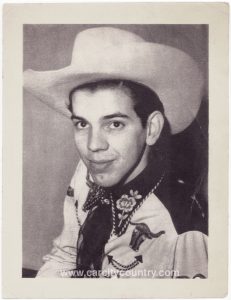
Franklin wrote “Hey, Mr. Presley,” a tribute song to Elvis, and recorded it for Fortune Records in Detroit that year (issued on Fortune 200). For the flipside of the 45-rpm disk, Franklin came up with another screamer called “Long Tall Lou.” Not long after he cut these rockers, assembled into one of the wildest records to originate in Detroit, Franklin disappeared.
The Prairie Drifters
Around late 1947 or early 1948, Jimmy Franklin (born in 1927) made his recording debut in Dayton, Ohio, with Jimmie Saul and his Prairie Drifters, a country swing band. Franklin, who sang and played upright bass, and guitar, and his brother Marvin “Whitey” Franklin, who played steel guitar, had moved from West Liberty, Kentucky, to work in Dayton’s country music nightclubs after World War II.
The Prairie Drifters cut four sides, which Saul pressed on his Redskin label through an arrangement with Four Star Records of California. Bill McCall had operated Four Star, out of Pasadena, for just a few years. Besides finding artists for his label through talent agents, McCall chose music for his catalog through a custom service that gave him access to recordings he could license to issue on Four Star.
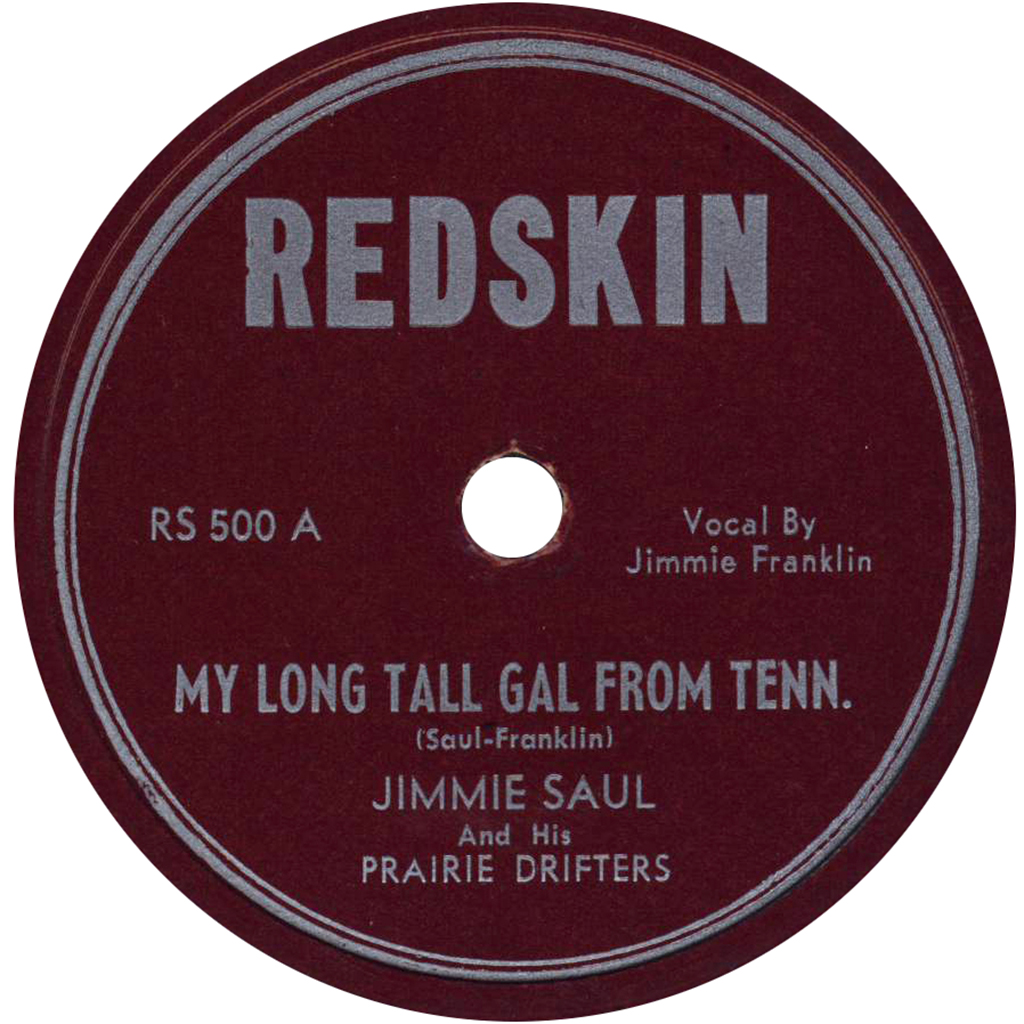 Franklin and company swung the beat on both sides of Saul’s first Redskin record (no. 500): Franklin’s “My Long Tall Gal From Tennessee” backed with “That’s All” (credited to “Saul-Travis” on the label, even though Merle Travis claimed full authorship on his 1946 recording for Capitol Records). The second record (no. 501) featured “Firecracker Stomp” (credited to Saul-Dalton), an instrumental with guitar and bass solos as explosive as its title. From the grooves of the flipside came “Oh What A Price You’ll Have To Pay,” a sweet, slow song by Franklin. From the start, Franklin’s vocals favored pop musical styles.
Saul’s unidentified crackerjack band included electric guitar, acoustic rhythm guitar, upright bass, and fiddle. In 1947, guitarist Roy Lanham established a version of his group the Whippoorwhills in Dayton, including Doug Dalton (mandolin), Gene Monbeck (rhythm guitar) and Donald “Dusty” Rhoads (bass). [2] Members of the Whippoorwhills may have been at Saul’s session, which might explain: a) over-the-top country jazz performances, and b) why Dalton’s name appeared on “Firecracker Stomp.” [3] Guitarist Chuck Oakes, who worked Dayton nightclubs with the Franklin brothers at the time, said, “I used to know a bunch of guys in Dayton who were real good musicians and one of ’em was Doug Dalton, [another] was Dusty Rhoads, and the other guy was Gene Monbeck, and he had a Stromberg guitar that was made in New York, a beautiful thing. … They were all friends of mine.”
Listen to: Jimmy Franklin – My Long Tall Gal From Tennessee
Billboard magazine gave Saul’s first record a favorable review in its May 8, 1948, edition. [4] Around December 1948, Bill McCall paired “Firecracker Stomp” and “My Long Tall Gal From Tennessee” on his Four Star label, just a couple of releases after the Maddox Bros. and Rose’s popular recording of Woody Guthrie’s “Philadelphia Lawyer.”
A few years after Saul’s Four Star record came out, both songs appeared again. “Firecracker Stomp” was reissued on Four Star under the name Jimmie Lane, as the B-side to the Davis Sisters’ “Jealous Love” (leased from Fortune Records in 1953). In 1957, Franklin, with Pete DeBree and the Wanderers, burned down “My Long Tall Gal From Tennessee” to extract the hard-rocking “Long Tall Lou” for Fortune. [5]

The Franklin Brothers
While living in Dayton, the Franklin brothers met guitarist Chuck Oakes, and worked with him and rhythm guitarist Emerson “Happy” Moore for several weeks before Oakes and Moore moved to Detroit. Jimmy’s wife, Dimples Darlene, also played bass and performed comedy with her husband on stage. In June 1949 the Franklin brothers toured Canada as the Radio Rangers, landing at CHAB radio Moosejaw, Saskatoon. [6] The group moved to the Motor City by 1950.
In Detroit the Franklins easily found work in the jumping nightclub scene. Chuck Oakes hired them as soon as they arrived. In 1951, fiddler and comedian James “Chick” Stripling worked with the Franklins, along with guitarist Chuck Carroll, at the Roosevelt Lounge. It was one of Carroll’s first jobs in Detroit. “Jimmy did most of the singing, then,” said Carroll. “Chick Stripling played fiddle, … Al Allen played [guitar]. I guess they were playing music six nights a week and we [Carroll and Allen] took turns. I’d play about the first three nights, … he’d switch it around and I could have the weekends off.” [7]
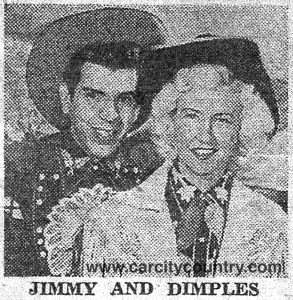 In early 1951 the group headed for a job at CKUA radio Edmonton, Alberta (Al Allen remained in Detroit). In June Billboard reported, “Georgia Cotton Pickers, heard daily over CKUA, Edmonton, Alta., have cut four sides for 4-Star. Personnel includes Jimmy and Whitey Franklin; Chick Stripling, formerly with Sunshine Sue, WWVA, Wheeling, W.Va.; Chuck Carroll, who did some sides for Fortune, the Detroit label, and Dimples Darlene, Jimmy’s frau.” [8]
Listen to: Jimmie Saul’s Prairie Drifters – Firecracker Stomp
Twelve months later, Billboard said the Franklin Brothers were touring Canada with Wilf Carter, a.k.a. Montana Slim. [9] Chuck Carroll returned to Detroit by the start of 1952.
After the Canadian tour with Carter, the Franklin brothers returned to Detroit, where they played gigs with Chuck Oakes, Danny Richards, and Eddie Jackson. Stripling also returned to Detroit, playing fiddle in the Motor City’s country nightclubs through the 1960s.
Coming in Part 2: Jimmy Franklin heads west for TV and radio work, then returns to Port Huron and Detroit, where he cuts his most famous disk of all.
*****************************************
Notes
- Chuck Oakes interviewed by Keith Cady in 2000.
- Rich Kienzle “Neither Fish Nor Fowl” Southwest Shuffle (New York: Routledge, 2003), 224.
- Jimmie Saul played the bass. This was confirmed by Happy Moore‘s wife Elizabeth to Craig Maki during conversation in February 2014. Also: After reading this story, researcher Kevin Coffey sent Craig Maki a note on May 6, 2013. Years ago, Coffey had a suspicion Roy Lanham played on “Firecracker Stomp.” He asked bassist Red Wootten, who was associated with Roy Lanham and Doug Dalton, if he recognized the musicians on the instrumental, and Wootten suggested Doug Dalton played fiddle on the session.
- “Record Reviews” Billboard (May 8, 1948. Vol. 60, No. 19), 127. “Franklin’s singing clear and well-phrased. Lyric a cut above average folk stuff, and the Drifters come on.”
- Jack and Dorothy Brown of Fortune Records leased their recording of the Davis Sisters “Jealous Love” to Four Star after the Davis Sisters signed a contract with RCA-Victor and left Detroit. Pete DeBree’s first single on Fortune was an instrumental called “Wanderers Blues” backed with a shuffling version of Hank Williams’ “My Bucket’s Got A Hole In It,” sung by Bernie Sanders (no. 193, 1956).
- Johnny Sippel “American Folk Tunes” Billboard (June 11, 1949. Vol. 61, No. 24), 30, 34.
- Chuck Carroll interviewed by Keith Cady in 2000.
- Johnny Sippel “American Folk Tunes” Billboard (June 9, 1951. Vol. 63, No. 23) 30.
- Johnny Sippel “American Folk Tunes” Billboard (June 14, 1952. Vol. 64, No. 24), 59.

After a lifetime of playing music in Detroit, Johnny Clem’s recollections form a winding trail through Detroit nightclubs, bars and lounges whose past existence is now only evidenced by photos and stories, such as the time he worked with bandleader Danny Richards at a barn dance staged in the legendary Graystone Ballroom during the 1950s, or when he recorded for Joe Von Battle in the back of Joe’s Record Shop on Hastings Street.
From Alabama to Detroit
Tiny Elkmont, Alabama, near the southern border of Tennessee, sits almost the same distance from Nashville to the north, and Birmingham to the south. The Delmore Brothers, renowned for making hillbilly blues and boogie woogie popular during the 1930s, were born there, as was Johnny Clem on September 7, 1929, the year that the Delmores started their act. A few years later, during the Great Depression, Clem’s father took a job with the Tennessee Valley Authority, and moved the family to east Tennessee.
Clem’s friendly personality and ability to learn multiple musical instruments led him to sit in with many groups at a moment’s notice. In 1946, Clem picked electric guitar for the Golden West Cowgirls (Gladys and Ann) during early morning radio broadcasts at WROL Knoxville. He joined the U.S. Navy the following year, and after completing two years of service, moved to Detroit to work in Chrysler’s facilities on the east side of town. (Clem remained active in the navy for another six years.)

While living in a dense area of the city populated by thousands of people who had arrived from the South for work, Clem found loads of opportunities to play music in local bars. Jeff Durham, a guitarist, singer, and comedian, led a band at a nightclub on Jefferson Avenue and St. Jean, where Clem played his first Detroit gig, strumming a Hawaiian steel guitar in the group. “Jeff would do comedy, and put makeup on his face,” remembered Clem. “Then he shined a black light on himself, to make his face glow.” [1] Durham also had a reputation for finger style (or Travis) picking, as he had grown up in Muhlenburg, Kentucky, and had been acquainted with guitarists Mose Rager, Ike Everly, and Merle Travis. (Watch for an upcoming story about Jeff Durham and his brother Bob.)
An eager participant in country-western jamborees held at bars such as Ted’s Ten-Hi [you can see him in the group photo at the front of the chapter on Eddie Jackson in the “Detroit Country Music” book], Clem also taught himself how to play piano. “I never learned to read music, but I still got pretty good,” he said. “[Piano] became my main instrument for many years.”
According to Clem, his early gigs in Detroit included:
ca. 1950 — Al Dorman’s Bar, with Pioneer Playboys: Johnny, Chuck, Bill, and George Upton (14800 Mack, near Alter)
1950 — Caravan Gardens, with Eddie Jackson (Woodrow Wilson and Davison)
1951 — Torch Bar, with trio (East Jefferson Avenue, across from Hudson Motor Car facilities)
1951 — [Unknown club], with Waldo Walker (East Jefferson Avenue and Kitchener)
1952-53 — Torch Bar, with Swannee Caldwell (bass) and Red Peterson (guitar) [2]
A tattle on Von Battle
In 1953, Clem worked briefly with African American record shop owner Joe Von Battle. In the back of Joe’s Record Shop at 3530 Hastings, Von Battle built a recording studio. Clem said he often visited a restaurant across the street from the shop, and he got to know Von Battle by running into him there. “After our gigs, after the clubs closed, the boys and I’d go to the Checker Bar-B-Q near Hastings Street,” said Clem. “I don’t remember how we met, but [Von Battle] wanted me to cut a country version of a song called, ‘Another Soldier Gone.’ Eventually, we visited the studio he had in the back of his shop and cut it. I sang and played piano on it. I don’t think it was released, but Joe gave me a dub of it on a record.”

From around 1948, Von Battle had been recording local blues, jazz, and gospel performers. He had just cut “Another Soldier Gone” by a vocal group called the Violinaires, issued on the Drummond label of Detroit, and he wanted to explore the idea of making a “crossover” record of it with Clem. At the time, record companies often directed their pop and country-western artists to remake popular rhythm and blues songs, and vice versa. While the artists and instrumental style of these records differed, the songs themselves often appeared on multiple charts.
Clem’s version of “Another Soldier Gone” wasn’t released commercially. But the memory of this small episode in Clem’s career provides us with one of the earliest accounts of black and white musicians collaborating in Detroit.
Astronaut of Detroit rock
When it came to music, Clem approached it with an open heart and mind, and his reputation kept him working. More bookings included the following with local bandleaders:
mid-1950s — Yale Bar with Luke Kelley (Warren at the John C. Lodge Freeway)
1955 — Dixie Belle, with Jack Luker (Vernor and McKinstry)
1956 — 3-JJJs, with Les York (Vernor and Clark)
Not surprisingly, Clem was an early adopter of rock’n’roll, which was popular in the city from the mid-1950s through the 1970s. One of his first rocking gigs was at the Shamrock Bar on Third Street and Selden, a rough area in 1957-59, but each musician (Sonny Croft – drums, vocals; Leon Chessire – lead guitar) earned $20 a night, which amounted to big bucks in those days.
After Casey Clark ceased production of the Lazy Ranch Boys Barn Dance in the union hall at 12101 Mack Avenue in 1957, Clem, vocalist Randy Sea and six other musicians worked dances there on weekends.

Clem’s next move was to play piano with vocalist Carl Parker. They had a steady gig at the Scenic Inn (Fort and Miami) with a man named Ted on saxophone around 1960, reportedly earning $300 per week. Then he joined Randy Sea, with Norm Sands on drums, and Leon Chessire on guitar at the Rose Bar (Vernor and Morell). Clem’s own band, Johnny and the Astronauts, worked Joe’s Bar at Jefferson and Chene, from around 1960-64, and for a while included guitarist and songwriter Jimmy Johnson, who later worked in Nashville with the Louvin Brothers, Leroy VanDyke, Jimmy Dickens and others, and spent four years on the “Grand Ole Opry” (Johnson died in 2014).
Clem also worked at Joe’s Bar with guitarist Bill Merritt, who played in town for many years. From there, Clem gigged at Ted’s 10-Hi on Jefferson and Fairview with Deano DelRay, and then to the O’Mack Bar (Mack and St. Jean) with Waldo Walker and Whitey Franklin. From about 1964-68, Clem worked the 509 Club downtown with Franklin and his brother Jimmy.
With Clem on piano, Carl Parker cut some recordings for which they didn’t find a commercial outlet. The recording presented with this story was made during a gig by guitarist Al Allen and the Sounds at Jerry’s Show Bar in 1960, and features Parker, with Clem on piano, sitting in with the band.
Listen to: Carl Parker with Johnny Clem (piano) and Al Allen (guitar)

Some country recordings were put on tape with Jay Preston for the Clix label, based in Troy, Michigan, which seem to be lost, as well as a session at Fortune Records in Detroit. Although Johnny Clem didn’t release records of his own, he made a contribution to the Detroit scene, like many others who shared space on local bandstands (for another example, see Happy Moore’s story). Through the decades, Clem worked with vocalist Danny Richards at the Red Robin on Jefferson Avenue and at the Hazel Park Eagles with Richards and guitarist Chuck Oakes. In 1978 Clem had a steady gig at Rose Lounge on West Vernor with bandleader Jimmy Kelley (Luke Kelley’s son). He played at the Clinton Gables Hotel on the Clinton River near downtown Mount Clemens, with Tony Gee and the Continentals during the 1970s, as well as Castaways near 23 Mile and VanDyke with Jay Preston and guitarist Dave Morgan.
During the 1990s, Clem moved just north of Palm Beach, Florida, and entertained crowds of retirees “as much as I could stand it,” he said with a chuckle. As of this writing, Clem is back in Michigan to be near family, and retired from entertaining.
Update: Johnny Clem passed away June 3, 2018.
************************************
Notes
- John Clem interviewed by Craig Maki in January 2016.
- Many nightclub owners booked extended contracts with bands for weeks of steady entertainment.